This chapter investigates the connection between democracy and creativity and social change. The Swedish author of children’s books, Astrid Lindgren, underpins the importance of imagination as part of social change: ‘Everything great that ever happened in this world happened first in somebody’s imagination’ (Lindgren, 1987). Here she was echoing John Dewey, who portrays ideas as ‘images-of-things-that-might-be’ (Dewey, 1938/1976). But in order to transform and materialise an idea, human action is needed. It calls for reflection that draws on knowledge and experience in order to determine whether the ‘might be’ can be transformed into ‘are’. This means that transformation processes include dialogue processes, interaction, and negotiation. To me, the essence of innovation is that, in contrast to creativity, the latter may appear through the idea or the vision itself.
Forskningsdatabase
Tilbage
Abstract
Fakta
Titel
The Importance of Imagination in Educational Creativity when Fostering Democracy and Participation in Social Change
Forfatter(e)
Birthe Lund
Udgiver
De Gruyter Brill
Udgivelse
The Creative University: Contemporary Responses to the Changing Role of the University, 1. udg, s. 11-31
Genre
Bidrag til bog
Omfang, antal sider
20
Udgivelsesår
2018
Almen didaktik og pædagogik
Nyt fra Gymnasieforskning
Få Nyt fra Gymnasieforskning direkte i din indbakke.
Du får:
- Oversigter over den nyeste forskning i vores database indenfor netop dine fag og interesseområder
- Nyheder om vores magasin, podcast, konferencer og nye tiltag
Er du ansat på en institution, der abonnerer på Gymnasieforskning, kan du, ud over Nyt fra Gymnasieforskning også få adgang til magasin-arkivet online, ved at logge ind eller oprette en bruger-profil.
Ups. Der er gået noget galt. Opdater siden og prøv igen.
Seneste magasin
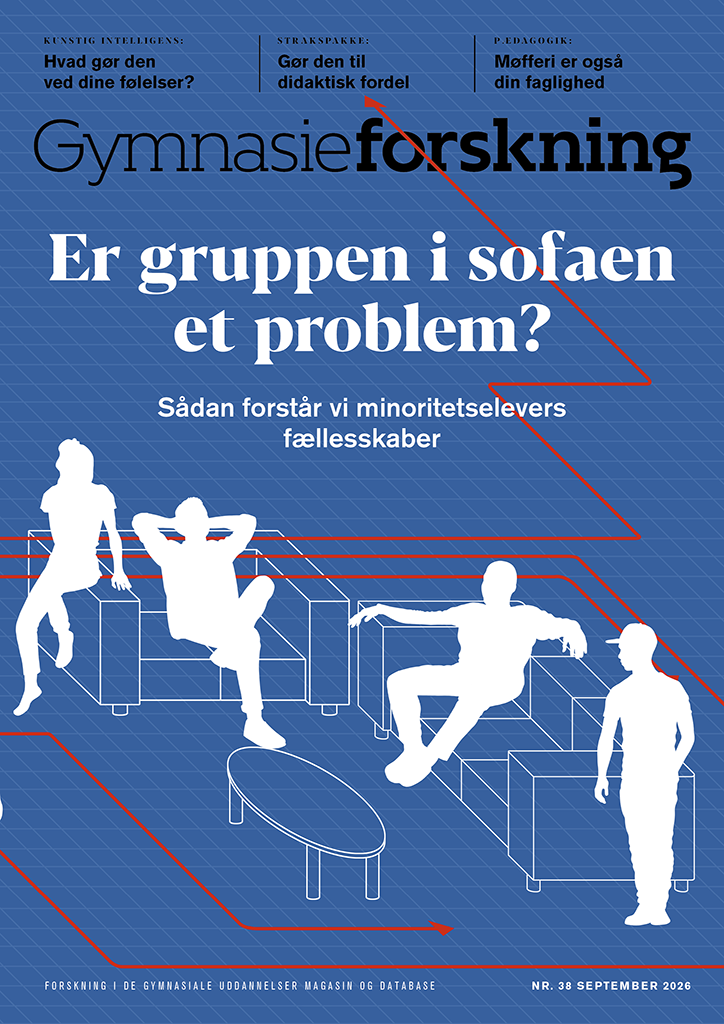
Magasin #38
er ude nu
Parallelsamfund og social kontrol eller tryghed, tilhør og et stærkt gymnasiefællesskab? Hvordan forstår vi minoritetselevers fællesskaber? Ny forskning.
Læs desuden om
AI og følelser
Unges skjulte kropsidealer
Epx og ledelse
Skriftlighed efter AI
Pædagogisk møfferi


Viden, der inspirerer og kan bruges i praksis
Tegn abonnement på vores magasin Gymnasieforskning og få den nyeste forskningsviden om de gymnasiale uddannelser – direkte målrettet undervisere og ledere i gymnasiesektoren.